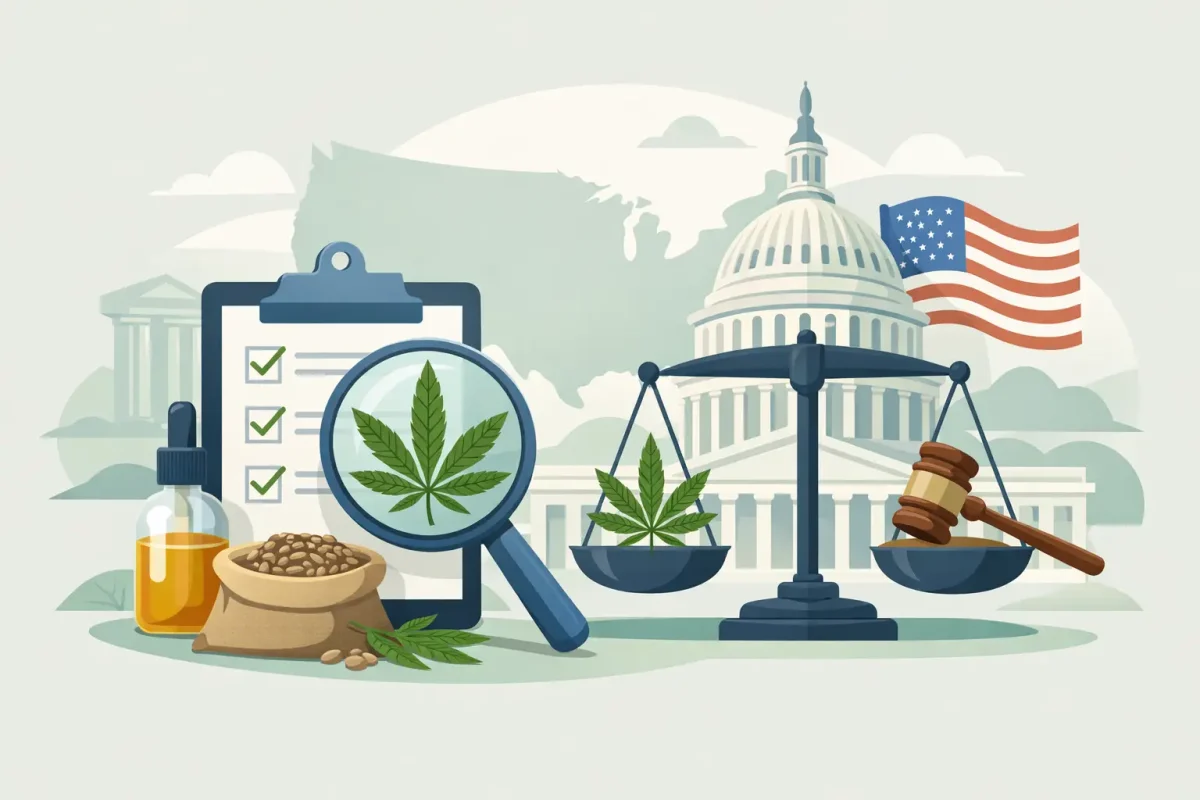
Buyers usually ask one version of the same question before they place an order: is hemp regulated, or is this market still the wild west? The honest answer is yes, hemp is regulated—but not in one simple, universal way. In the US, hemp sits under a mix of federal law, state law, agency oversight, testing standards, and product-specific rules. That matters because a hemp flower jar, a CBD gummy, and a vape cart may all come from the same plant while facing very different compliance expectations. Understanding how hemp is regulated is crucial for consumers.
One aspect that often gets overlooked is how hemp is regulated across different regions, which can significantly affect consumer choices.
For shoppers, the biggest takeaway is reassuring. Legal hemp products are not operating in a law-free gray zone. There are rules around cultivation, THC limits, transport, manufacturing, labeling, and, in many cases, lab testing. At the same time, the details can shift from state to state, which is why smart buying starts with understanding the basics instead of assuming every product is treated the same.
When considering a purchase, it's essential to ask yourself: is hemp regulated in this state? This question guides smart shopping.
Another important point to remember is how hemp is regulated at both state and federal levels to ensure safety and compliance.
Is hemp regulated at the federal level?
Yes. Federal law clearly regulates hemp. Understanding how hemp is regulated helps clarify its legal status.
That one number changed the market, but it did not create a free-for-all. The US Department of Agriculture oversees hemp production programs. Farmers generally have to be licensed under a state, tribal, or federal hemp program. Crops may be sampled and tested, and non-compliant plants may be required to be destroyed. So when people ask about whether hemp is regulated, the answer starts with understanding that hemp regulation varies.
Therefore, knowing how hemp is regulated is vital for informed decisions.
Federal regulation also does not stop on the field. The Food and Drug Administration has authority over many consumer products that contain hemp-derived ingredients, especially when those products are marketed as foods, supplements, cosmetics, or wellness items. The FDA has taken a cautious approach, particularly around CBD in food and dietary supplements, and it pays close attention to health claims. A company cannot just say a hemp product treats anxiety, pain, or disease without raising regulatory issues.
In essence, the question of how hemp is regulated encompasses multiple layers of both federal and state guidance.
Where federal law ends and state law begins
This is where hemp gets more complicated. Federal law opened the door, but states still control a lot of what happens inside their borders. Some states broadly allow the sale of hemp-derived products. Others restrict certain cannabinoids, smokable hemp, edible formats, or inhalable products. A few states apply packaging, registration, or age-gating rules that go well beyond federal requirements.
This disparity raises the question: is hemp regulated uniformly across states? The answer is often no.
That means a product can be federally lawful in principle and still face limits in a specific state. For example, one state may allow hemp flower but impose tough testing and labeling rules, while another may take a stricter stance on products that look or act too much like marijuana products. This is one reason reputable retailers pay close attention to shipping restrictions. Nationwide availability is never as simple as putting a product online and assuming it can go everywhere.
For consumers, the practical point is simple: legality is layered. Federal legality matters, but state-level compliance matters too. If a brand is careful about where it ships and how it describes its products, that is usually a good sign. Moreover, understanding how hemp is regulated helps consumers make informed choices.
Understanding how hemp is regulated empowers consumers to navigate these complexities.
What parts of the hemp industry are regulated?
Hemp regulation touches almost every stage of the product journey. Cultivation is regulated through licensing, THC testing, recordkeeping, and disposal rules for non-compliant crops. Processing can involve manufacturing standards, ingredient sourcing, and state registrations depending on the product category. Retail sales may be subject to labeling, age verification, tax treatment, and restrictions on what can be sold in a given market.
This implies that consumers should always check how hemp is regulated in their area.
Overall, the framework of how hemp is regulated serves to protect consumers and create a more reliable market.
Testing is one of the biggest areas shoppers should care about. Hemp products are often evaluated for cannabinoid potency, including delta-9 THC levels, and many brands also use third-party labs to screen for pesticides, heavy metals, residual solvents, mold, and other contaminants. Not every market applies these rules in exactly the same way, but the broader point holds: regulation is not just about whether hemp is legal. It is also about whether the product is accurately represented and reasonably safe.
Thus, the question remains: is hemp regulated effectively in your region?
That is why third-party lab testing has become such a core trust signal. In a category where people care about wellness, calm, clarity, and everyday quality of life, clean sourcing and transparent reports matter just as much as strain names or flavor descriptions.
Why hemp flower, CBD, and cannabinoids are treated differently
This dynamic raises additional questions: is hemp regulated differently for each product type?
One reason shoppers get confused is that hemp is a plant category, not a single product. Regulations can look different depending on what is being sold.
Hemp flower often gets the closest scrutiny because it resembles the cannabis flower and raises enforcement questions around THC content and visual similarity. Some states have been more cautious regarding smokable hemp for that reason.
CBD products occupy a different lane. Topicals, tinctures, gummies, and capsules may each trigger different regulatory questions based on how they are marketed and consumed. Claims matter here. A product described as supporting relaxation or general wellness is in a very different position from one advertised as treating a medical condition.
Consequently, understanding how hemp is regulated can help clarify these distinctions.
Then there are newer hemp-derived cannabinoids such as THCA, Delta-8, or other minor cannabinoids. These products have brought even more attention from lawmakers and regulators because they sit at the intersection of chemistry, consumer demand, and state-specific interpretation. A hemp-derived cannabinoid may be legal in one jurisdiction, restricted in another, and under active review in a third. That does not make the entire category illegitimate, but it does mean consumers should buy from sellers that understand the rules instead of guessing.
Thus, when navigating the complexities of cannabinoids, it is important to ask, “How is hemp regulated in your state?”
Is hemp regulated for safety and labeling?
Inquiring about how hemp is regulated can reveal important insights about product safety.
In many cases, yes—but the strength of those protections depends on the product type and the state. Labels generally need to avoid being false or misleading. They may include cannabinoid content, ingredient details, serving information, batch numbers, warning language, or scannable lab access, depending on the market.
The catch is that regulation does not always create perfect consistency. Two products can look similar online while being made under very different standards. One brand may use clear batch-specific testing and careful manufacturing practices. Another may lean on vague claims, weak paperwork, or outdated reports. That gap is why educated shoppers tend to focus on lab testing, sourcing, and transparency rather than price alone. This variability highlights the importance of understanding how hemp is regulated.
Affordable hemp can still be high quality, but low price should never be the only sign. In a regulated market with uneven enforcement, the best brands make compliance visible.
Ultimately, the clarity of how hemp is regulated affects consumer trust.
What smart shoppers should look for
If you are buying hemp online, regulations should shape how you shop. Look for products that clearly state hemp origin, cannabinoid content, and testing details. Check whether the seller appears to understand shipping limits and legal differences between states. Be cautious with brands making aggressive medical promises or hiding basic product information.
Consumers frequently ask, is hemp regulated with adequate oversight to ensure quality?
Moreover, knowing how hemp is regulated can help you identify trustworthy sellers with a track record of compliance.
It also helps to pay attention to how the product fits your goal. Someone looking for a non-intoxicating daily wellness option may choose differently than someone comparing hemp flower strains or exploring hemp-derived cannabinoids. Regulation often follows those distinctions. The more active or novel the product category, the more important it is to verify exactly what is in it and whether it is allowed where you live.
This highlights the importance of knowing how hemp is regulated to ensure safety.
This is where a curated retailer can save time. Instead of sorting through questionable listings, shoppers can focus on products that are federally legal, lab-tested, and presented with enough clarity to make an informed decision. That is a big part of why buyers come back to platforms like Royale Hemp—not just for price and variety, but for the confidence that someone is filtering out obvious red flags.

This decision underscores the inquiry: is hemp regulated in a way that supports consumer rights?
As you navigate these choices, consider the regulations that dictate how hemp is regulated.
So, is hemp regulated or not? The answer is multi-faceted and varies by region.
Absolutely. Hemp is regulated by federal law, state law, and product-specific rules that affect how it is grown, tested, packaged, marketed, and sold. What confuses people is not the absence of regulation. The fact that hemp is regulated can often feel overwhelming due to the fragmented nature of these regulations across different jurisdictions.
That can sound complicated, but for consumers it leads to a simple buying standard: choose transparency over hype. The best hemp products are the ones backed by clean sourcing, third-party testing, accurate labeling, and sellers who treat legality as part of quality, not just a marketing line.
If you remember one thing, let it be this: hemp is regulated, but good shopping still matters. Rules create a baseline. Trusted brands make that baseline easier to see.
Therefore, consumers are left to ask, is hemp regulated thoroughly enough to meet their needs?
Ultimately, understanding hemp products legal status is key to making informed purchasing decisions.
Final thoughts: understanding how hemp is regulated is critical for informed purchasing decisions.

 Hybrid Flower – THCA